
The Clubhouse
That Never Was
A story of creative freedom, a clubhouse that was never built, and the unexpected experience of finding my way back inside it.

The Experience I Wanted to Create
Long before I could show someone what it might feel like to live inside an unbuilt home, I knew that was the experience I wanted to create.
My approach to design has always begun with the person who will live in the space. Not just what a home needs to contain, or how it ought to look, but what it should feel like to move through it. Where does it offer privacy? Where does it open toward the landscape? What happens when you need stillness, or connection, or a moment to yourself?
I didn't always have the language for what I was trying to accomplish. I knew that light, proportion, privacy, materiality and the relationship between spaces could influence how someone felt. Over time, that understanding became central to my approach to wellness-focused, custom home and interior design. I wasn't simply interested in creating beautiful environments. I wanted to understand how the environments we inhabit affect the way we live.
For years, I used 3D modelling to bring clients into their future homes before construction began. The model could make a drawing understandable. It could show proportion, movement, and the relationship between rooms. It made conversations more immediate, and decisions more informed.
But I could sense a distance that remained. A person could understand the geometry of a space without feeling what it might be like to inhabit it.
During COVID, I developed a business concept around that missing experience: Experience Your Project Before It's Built. I was imagining technology that could close the distance between seeing a space and experiencing one. I knew what I wanted it to accomplish. I didn't yet know what the technology would be - or how close we were to it.
Room to Trust My Instincts
Then came an unusual opportunity: I was commissioned to design a clubhouse for a much larger development, with the freedom to bring my established wellness-focused design approach to the environment as a whole. Not one room, one finish, or one small piece of someone else's vision. I could follow an idea from the approach to the entry, through the architecture and interiors, into courtyards and sheltered outdoor rooms, and outward toward the landscape.
I remain grateful for that freedom. It gave me room to trust my instincts - and to see what happened when those instincts had the scale and budget to find their fullest expression.
What made the opportunity so meaningful was the ability to think beyond individual design decisions. I wasn't responding to isolated rooms or solving one problem at a time. I was considering the experience of an entire environment - how people would arrive, move, pause, gather, retreat and reconnect with the landscape, both now and for generations to come. For perhaps the first time, I could see how fully my architectural and interior design instincts belonged together.
What emerged was an architecture of relationships. Screens offered privacy without severing connection. Water marked transitions. Deep overhangs created shelter. Courtyards brought light, planting and open air into the experience of the clubhouse. Materials moved between interior and exterior so the boundaries felt less absolute.
I built the project digitally, making decision after decision about how these spaces should relate to one another. I knew the views. I knew the sequence of arrival. I knew what I hoped someone would feel standing there.


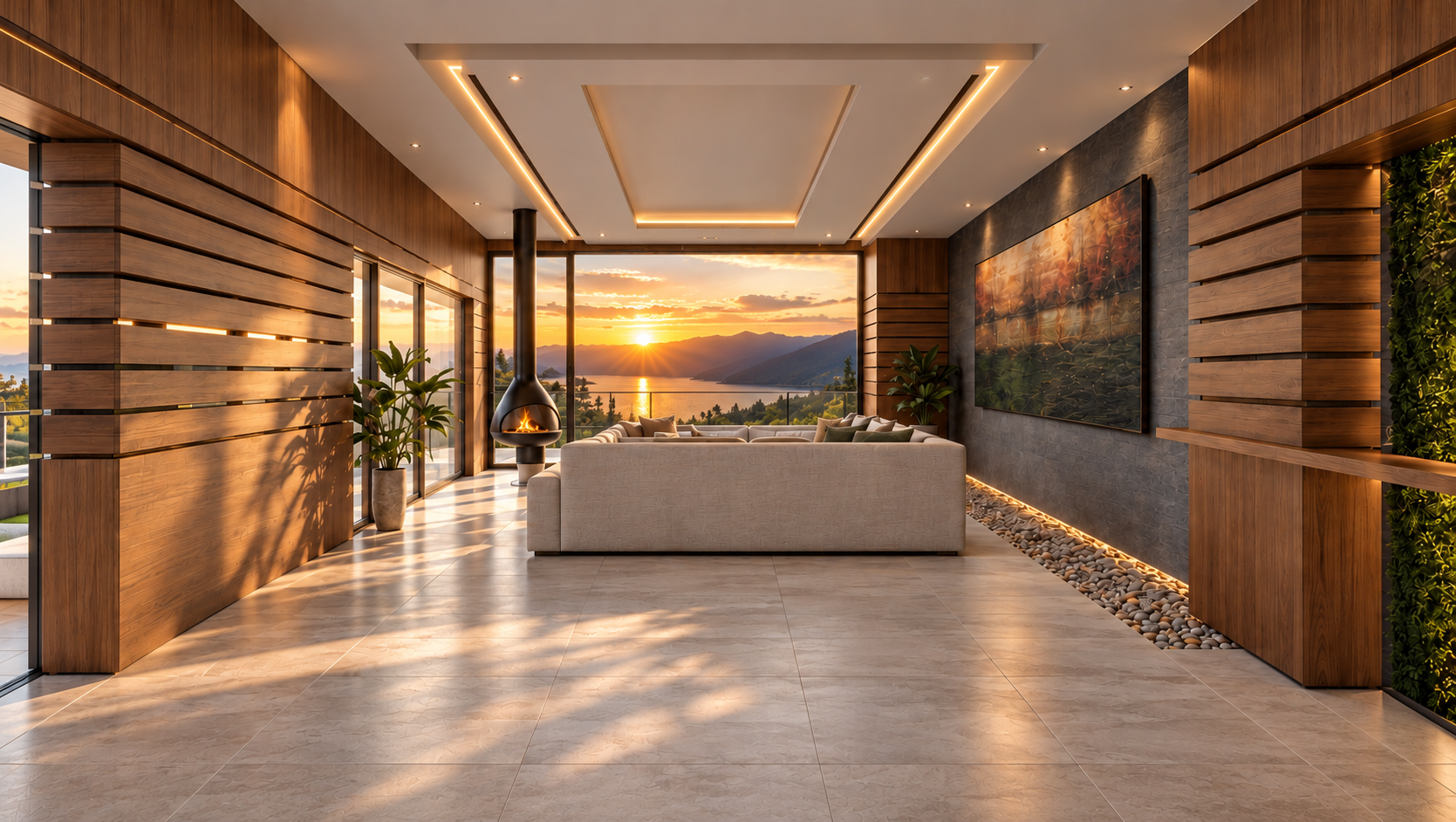
And then the clubhouse was never built.
There is a particular kind of loss in watching one of the most ambitious things you've created remain unrealized. Thousands of decisions, countless hours, an entire environment that existed in my imagination and in a model - but never as a place I could enter.
For a long time, the disappointment was inseparable from the project itself. It became easier to put the work away than to look at everything that might have been.
But the design was always there.
Finding My Way Inside
Years passed. My design practice evolved. So did the technology.
My original business concept of clients experiencing their projects before construction began was no longer something I had to imagine. AI-assisted visualization had arrived, and suddenly the feeling I wanted to create for my clients was possible. Ever since, I’ve been bringing that vision to life through Jraysignatures & Co.™
When I returned to the original model of The Clubhouse That Never Was, with the tools I use in my design process, I thought I was exploring what a familiar project could become with a new presentation method. I wasn't expecting to be moved by it.
But suddenly I could almost feel myself there. The warmth of sunlight across the floor. The protection of the courtyards. The weight of a wall beside an expanse of glass. The view waiting beyond a screen. It was the architecture I remembered, but the experience of seeing it had changed.
And then I recognized something even more surprising: I was responding to my own design in exactly the way I had spent years hoping clients could respond to theirs.
What I hadn't anticipated was how profoundly I would respond to that experience myself.
And I certainly never imagined it would happen inside a clubhouse I had designed years before - a clubhouse that would never be built.
The experience I had spent years wanting to create for others had finally come back to me.
The design didn't change.
The experience did.
These comparisons pair the original digital model with contemporary AI-assisted visualization. The architectural intent, spatial relationships and design decisions preceded the new imagery.
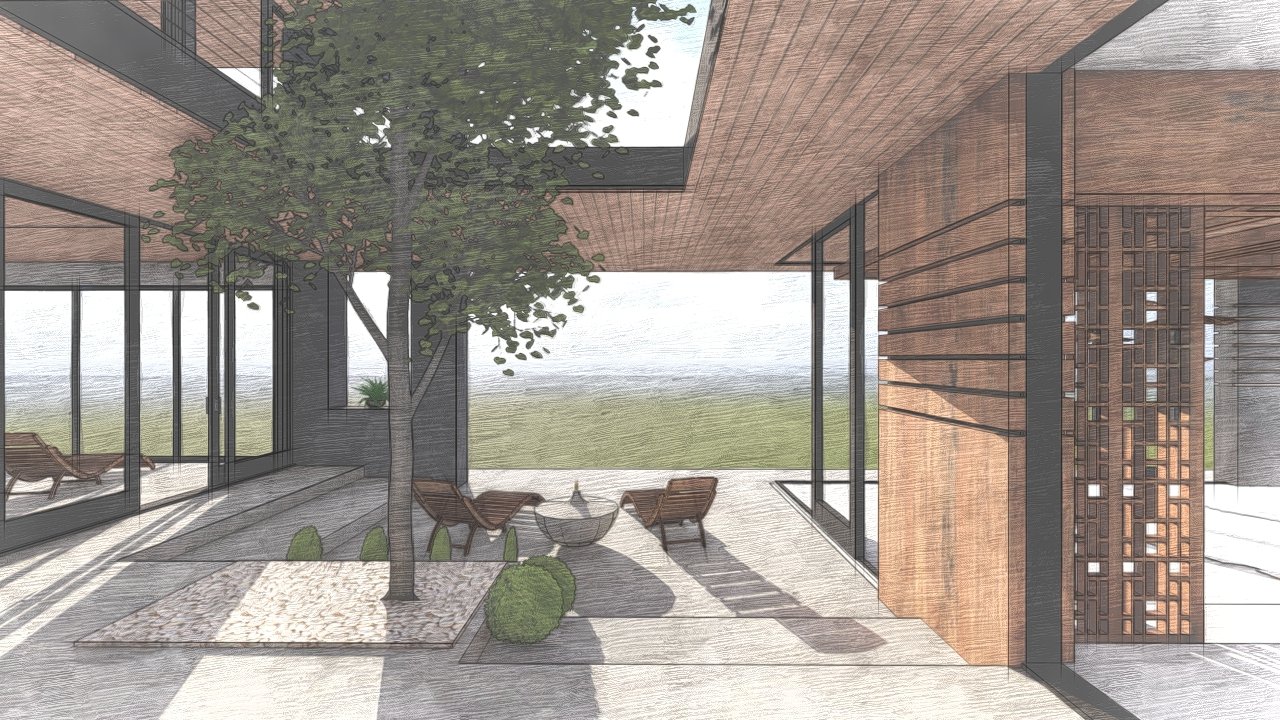

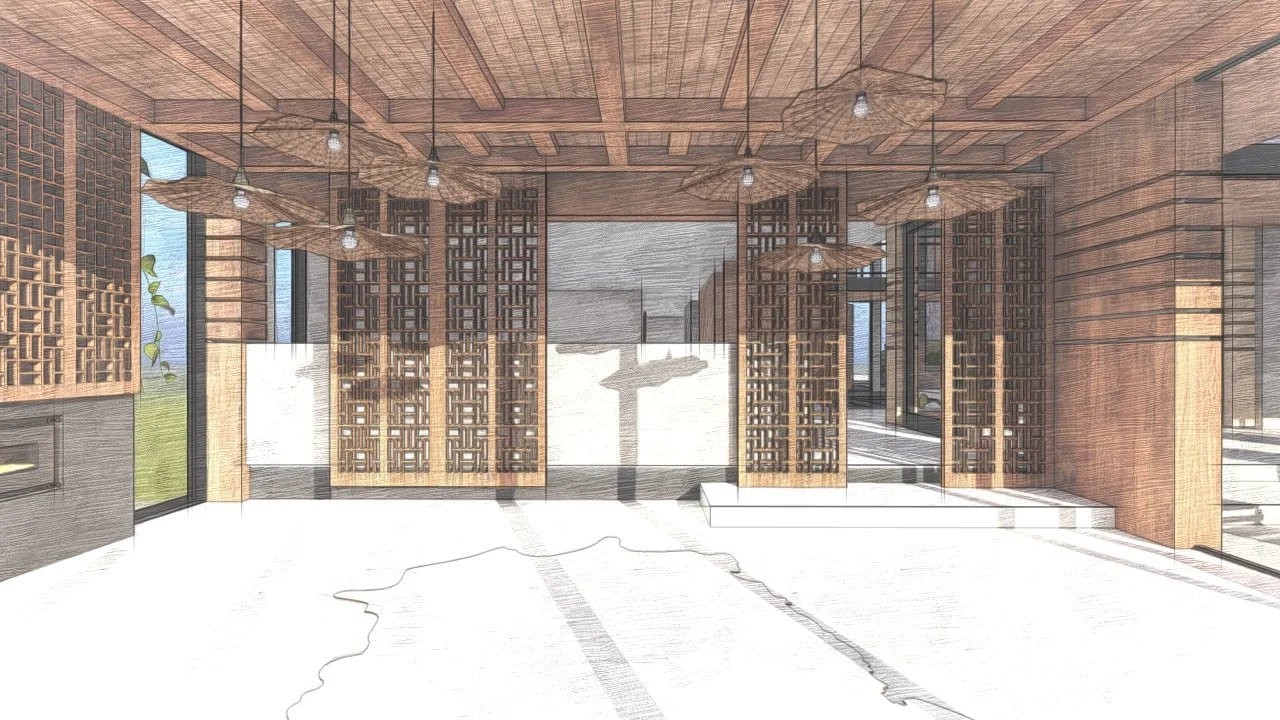

AI didn't come up with the experience. It finally rendered the experience I had designed.
And as I looked through the new images, I began recognizing decisions I had made years earlier. Not because I would design every detail exactly the same way today. I've learned too much for that. But the underlying instincts - the things I was drawn to, the questions I was asking, the feeling I wanted the clubhouse to create - were unmistakably mine.
I understand the reasons for some of those decisions better now than I did when I made them. Sometimes instinct arrives before language.
I thought I was returning to an old project to see what it could become with new technology. I didn't expect it to show me who I had already become when I designed it.
The technology didn't show me a different clubhouse. It changed my relationship with the clubhouse I had already designed. And it gave me back something I hadn't expected to recover: the ability to appreciate the work without letting the way the project ended define its meaning.
The clubhouse never became a building. But its ideas kept finding their way into my work, my philosophy, and the business I continued to build. Looking back, I can see that the project was never only about what might have stood on that site. It was also about the designer I was becoming while I imagined it.
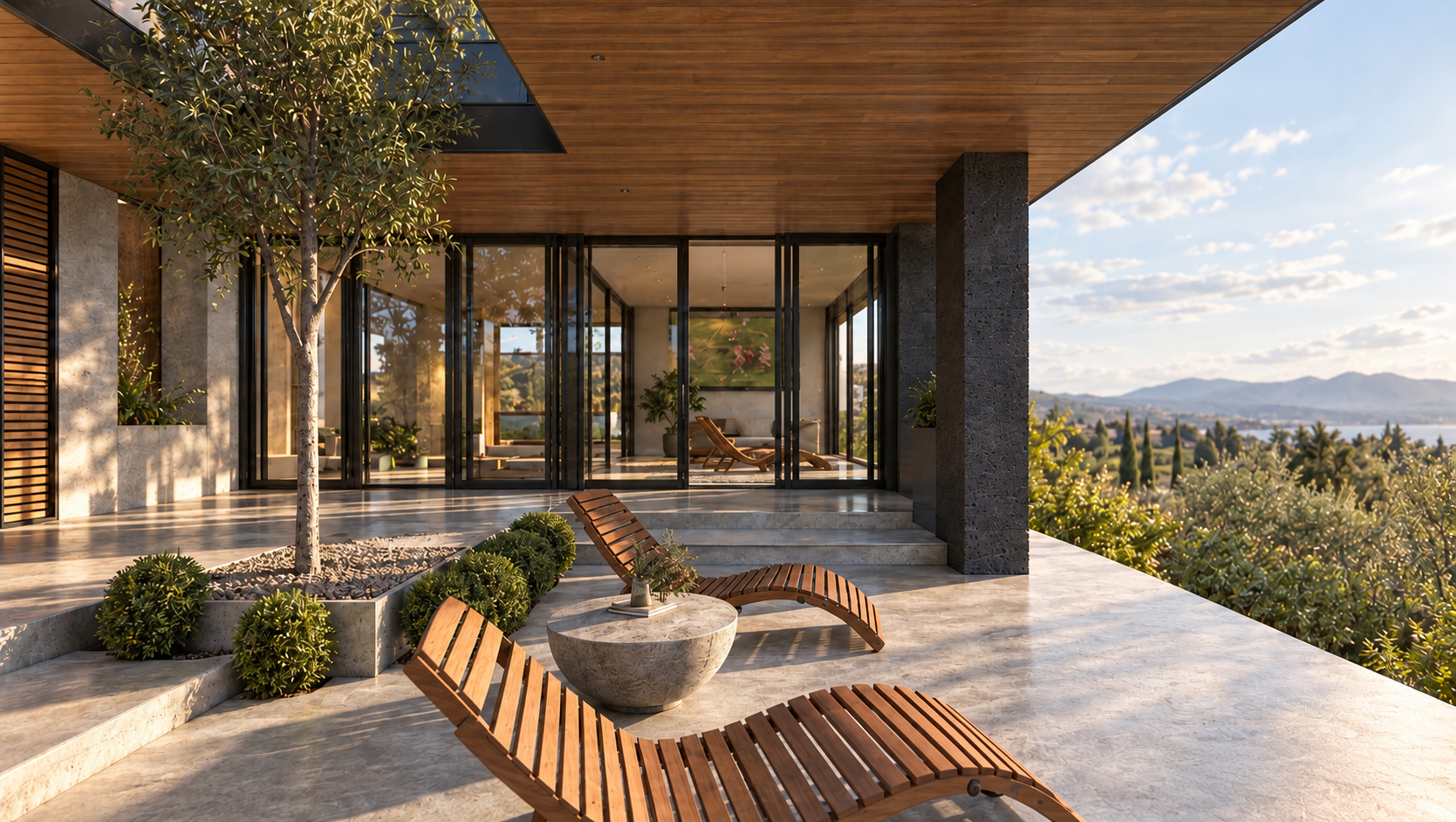
Maybe this clubhouse was never built.
But apparently, the project built something else.
Me.